Maria Auxiliadora da Silva
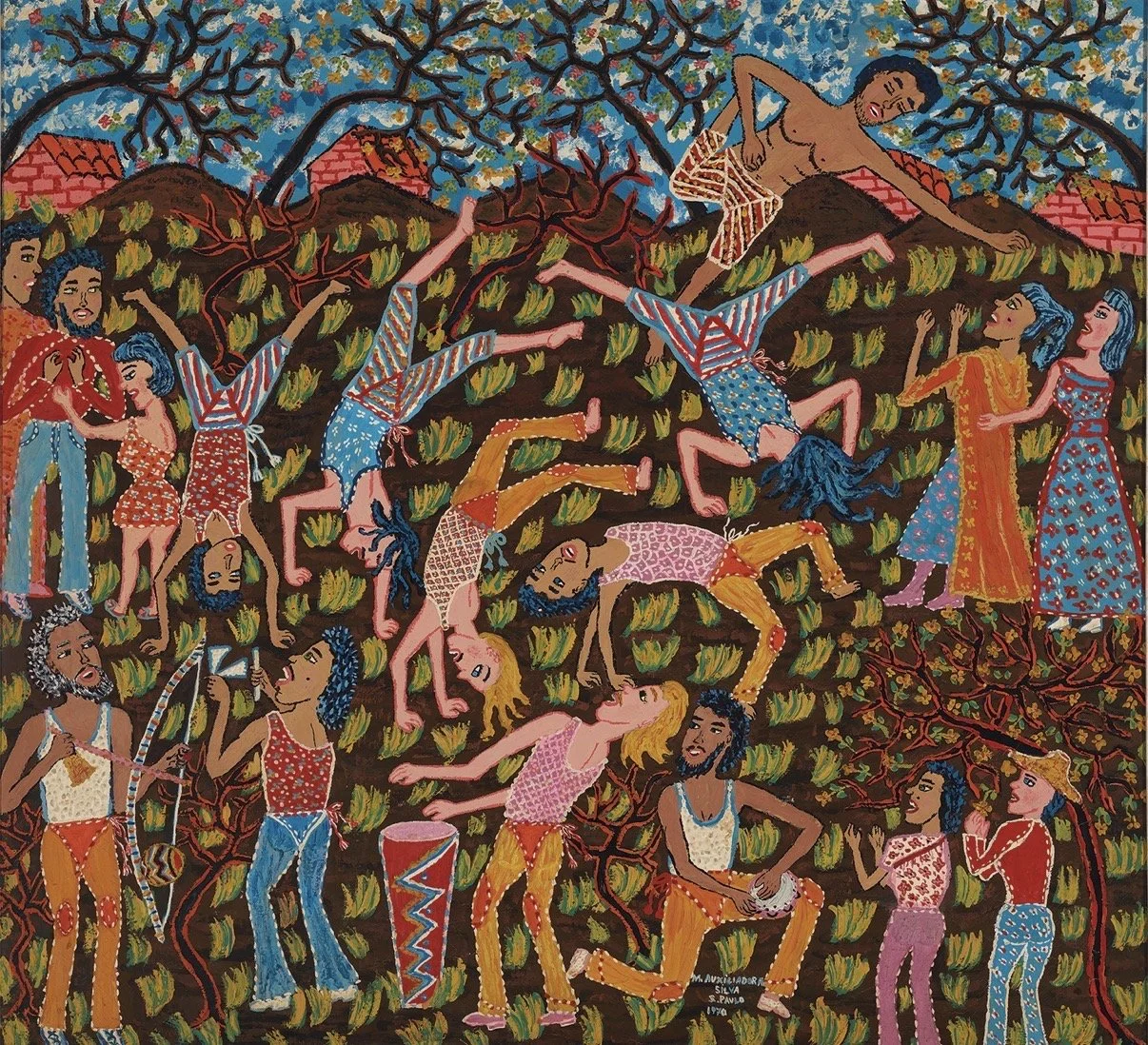
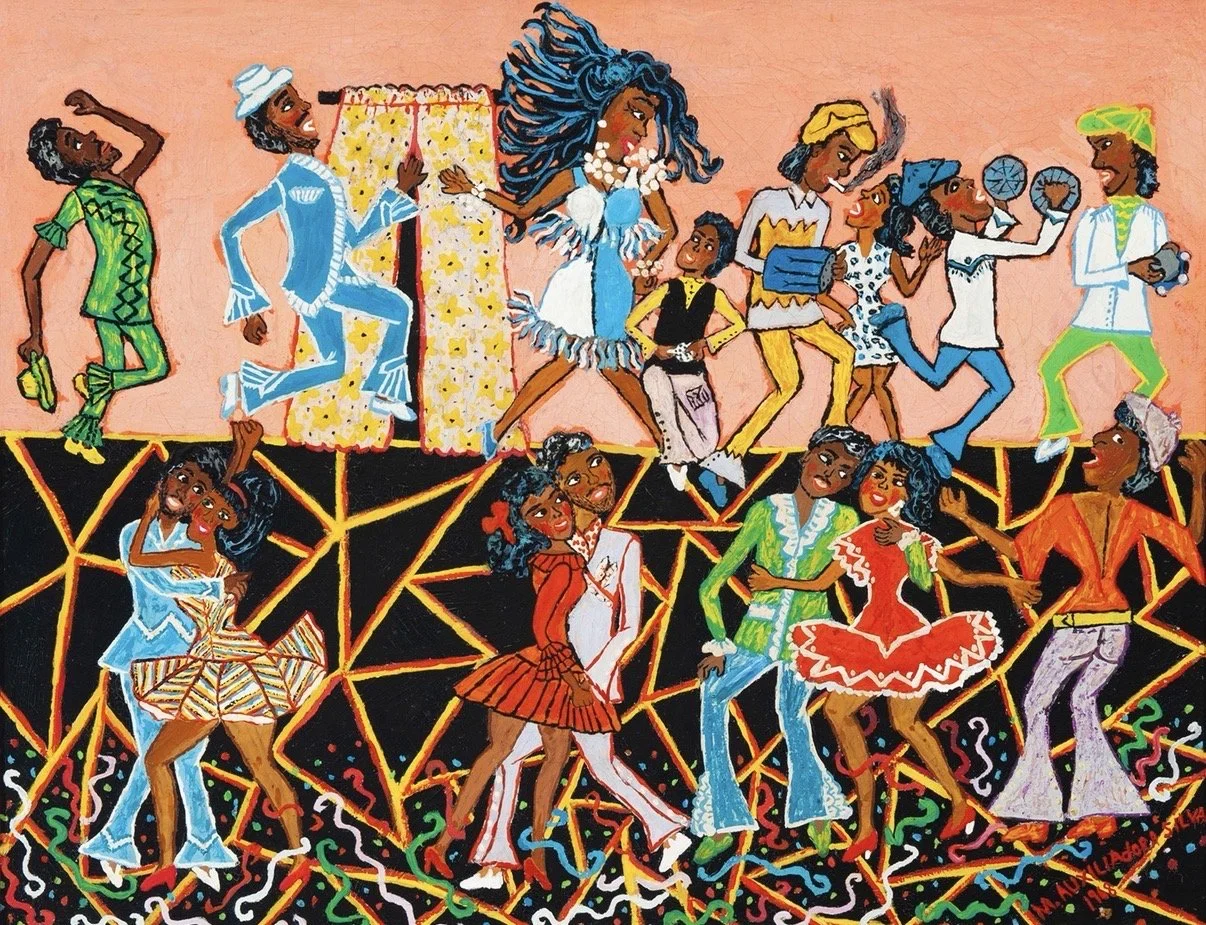
Capoeira, 1970. Oil and polyester resin on canvas
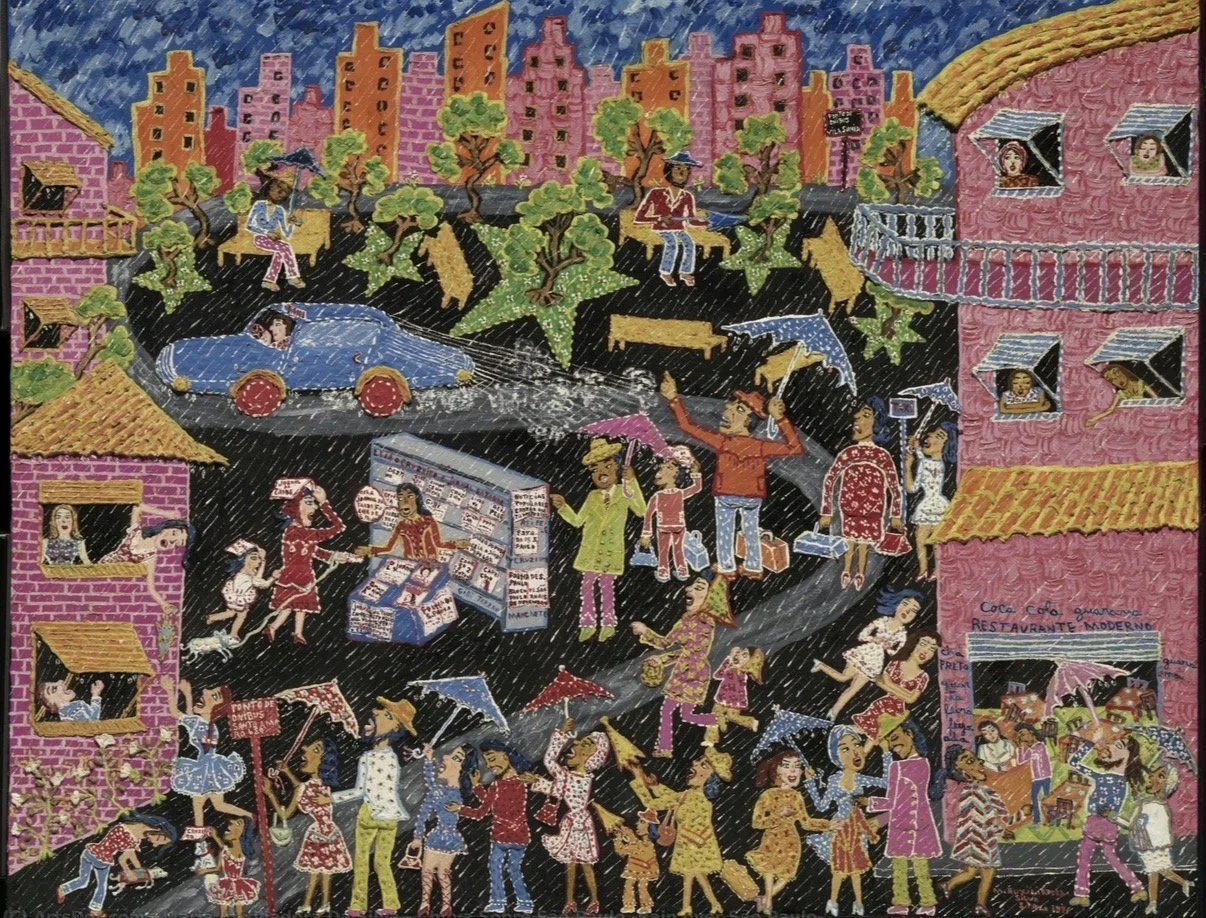
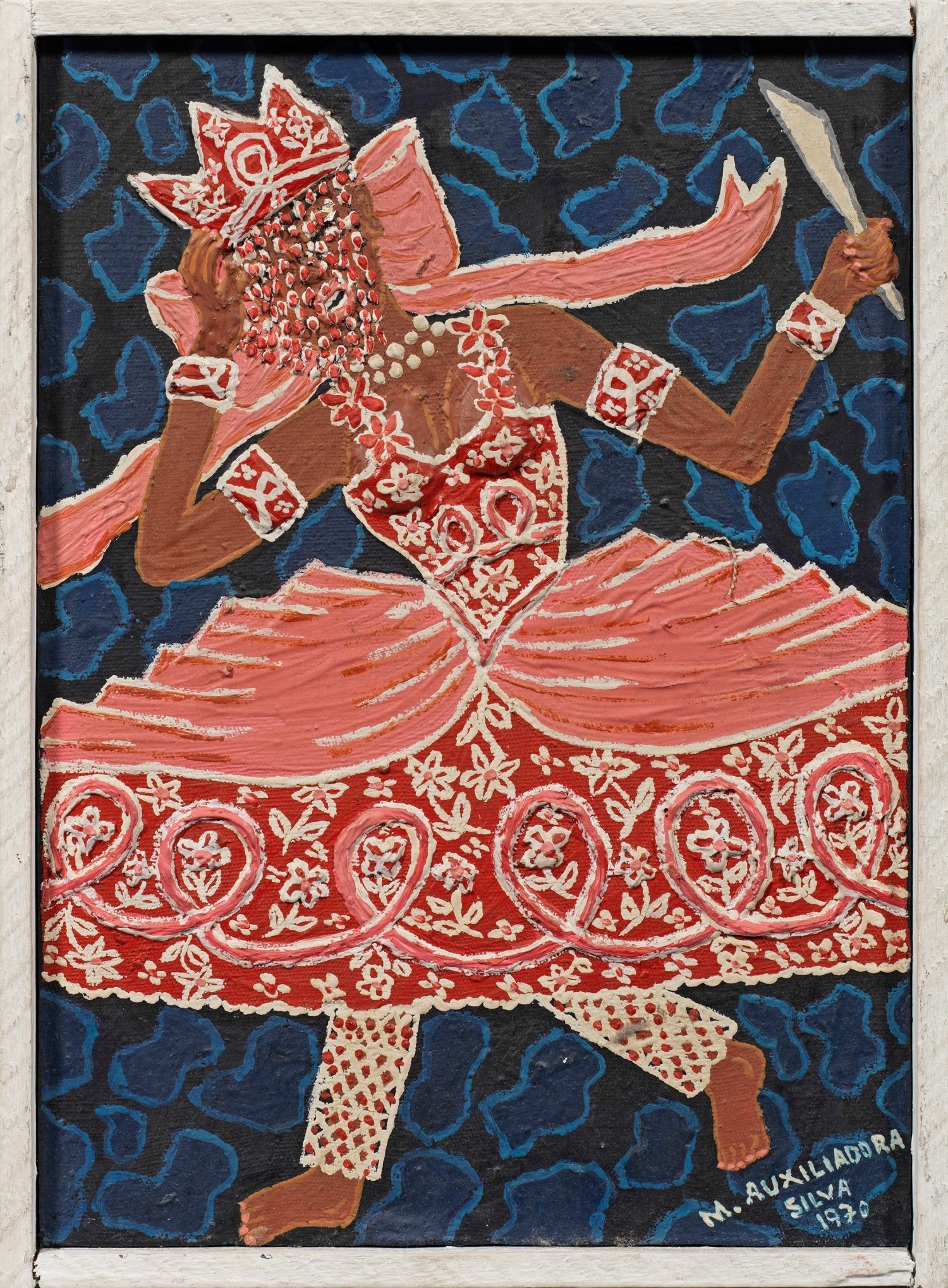
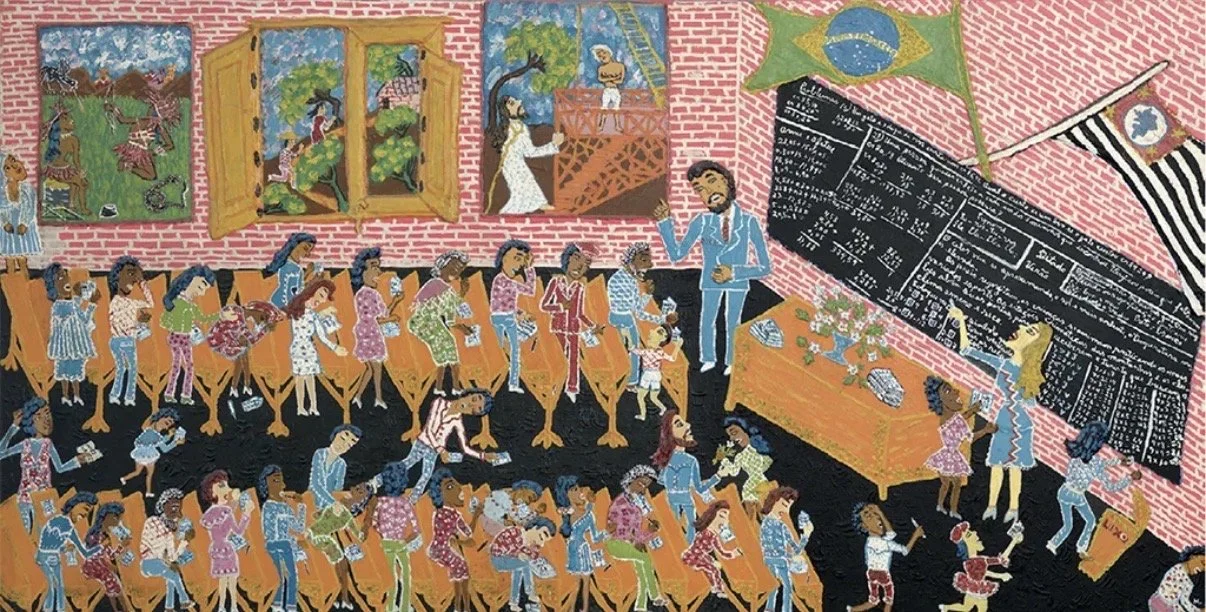
Maria Auxiliadora da Silva (1935–1974) was a self-taught artist born in Minas Gerais and later active in São Paulo. Her paintings portray the daily life, culture, and spiritual traditions of Black Brazilian communities with vivid color and striking texture. Working outside traditional academic institutions, she developed a distinctive visual language that combined painting with sculptural surfaces, building thick layers of pigment that give her scenes a tactile, almost three-dimensional presence.
Auxiliadora often depicted moments of communal life, domestic interiors, neighborhood gatherings, religious ceremonies, and scenes of work and celebration. Her compositions center Black figures with dignity and warmth, presenting everyday experiences as worthy subjects of artistic attention. The richly patterned surfaces and carefully detailed environments reflect both observation and memory, transforming ordinary moments into lasting visual records. Rooted in Afro-Brazilian cultural traditions, her work highlights themes of spirituality, labor, family, and collective identity. By portraying these scenes with intimacy and respect, Auxiliadora challenged the limited representation of Black life within mainstream Brazilian art during the mid-twentieth century. Her paintings function not only as artistic expression but also as cultural documentation, preserving histories and experiences often overlooked by dominant narratives.
Although her career was brief, Maria Auxiliadora da Silva is now recognized as an important figure in Brazilian art. Her work demonstrates how self-taught artists can reshape artistic traditions, expanding the boundaries of painting through personal vision and lived experience. Today, her paintings are valued for their emotional depth, cultural significance, and powerful affirmation of visibility and memory.